For parents & teachers
Crayons vs. Colored Pencils vs. Markers: Which Is Best for Your Child?
A simple comparison of crayons, colored pencils, markers and gel pens: what each is best at, which ages they suit, and how to pick safe supplies.
Walk down the school-supply aisle and you’ll see crayons, colored pencils, markers, gel pens and more. Which one should your child use? The short answer: it depends on their age, the page and what they want it to look like. This guide breaks it down in plain words.
Crayons
What they are: sticks of colored wax. They are tough, cheap and easy to hold.
Best for: toddlers, preschoolers and big, simple pages. The colors look bright and a little waxy, with some paper texture showing through.
Good to know: jumbo or triangle crayons are easiest for small hands and don’t roll off the table. Peeling some paper off and coloring with the side of the crayon fills big spaces fast. Keep them out of hot cars, because they melt.
Try them on: the bunny with carrots or ladybug. Read our full crayon guide.
Colored pencils
What they are: pencils with a core made of color instead of graphite. Press lightly for soft color, harder for strong color.
Best for: kids about 5 and up, teens and adults, and pages with small spaces. They are the best tool for shading and blending two colors together.
Good to know: a good sharpener matters as much as the pencils. Wax-based pencils feel soft and blend easily; oil-based pencils stay sharp longer.
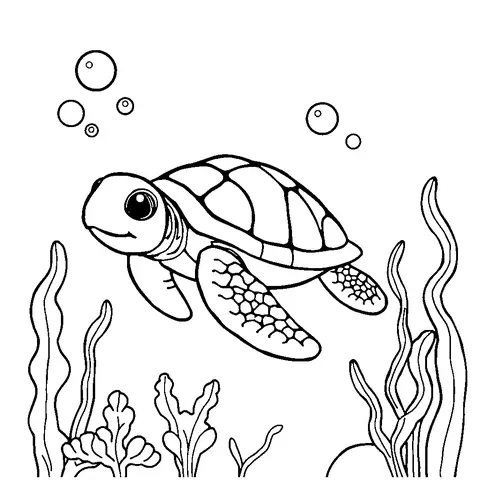
Try them on: the sea turtle, where you can shade each shell piece a different green. See our colored pencil guide.
Markers
What they are: pens with liquid ink and a felt tip. They make bold, even color with almost no pressure.
Best for: bright, flat color and quick results. Kids about 3 and up can use washable markers.
Good to know: washable markers wash off skin and most fabrics with soap and water. Markers can bleed through thin paper, so put a scrap sheet underneath. Alcohol markers blend beautifully but smell strong and bleed a lot, so they are for older teens and adults in a room with fresh air.
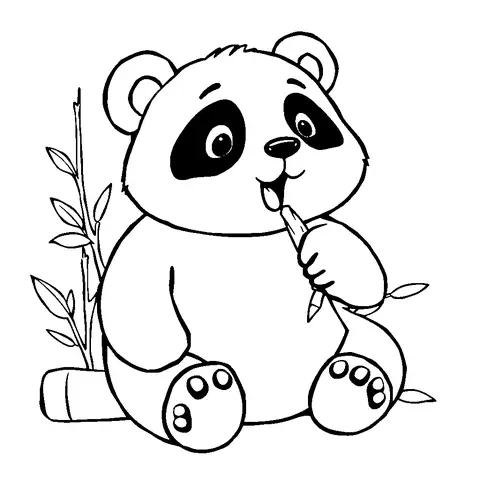
Try them on: the fire truck or panda. See our marker guide.
Gel pens
What they are: pens with thick, smooth ink, often glittery, metallic or neon.
Best for: kids about 6 and up who want sparkle, and for small details on any page.
Good to know: gel ink takes a few seconds to dry, so watch out for smudges. Glitter gel pens look amazing on dark colors.
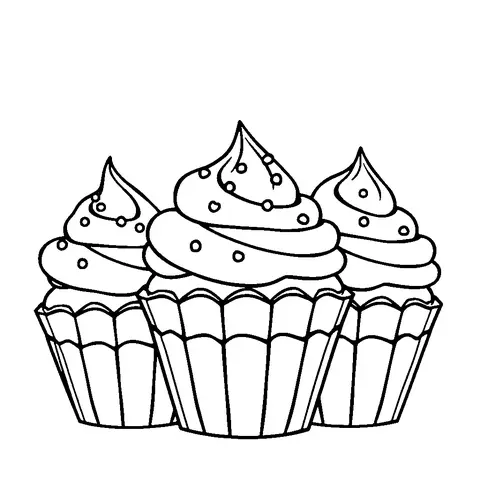
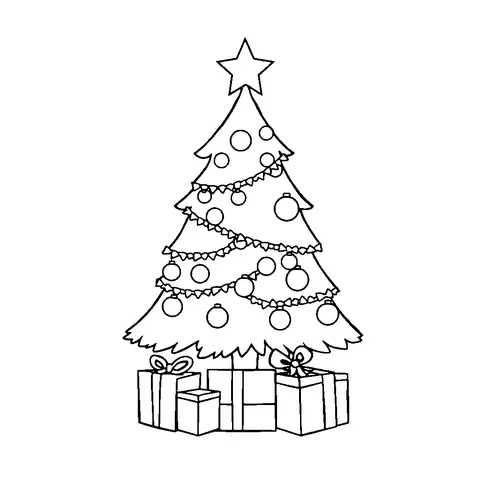
Try them on: the cupcakes sprinkles or ornaments. See our gel pen guide.
Side-by-side comparison
| Tool | Easiest age | Best at | Watch out for |
|---|---|---|---|
| Crayons | 1-2+ | Big spaces, little hands | Melting, breaking |
| Colored pencils | 5+ | Details, shading, blending | Need sharpening |
| Washable markers | 3+ | Bright, bold color | Bleeding, drying out |
| Gel pens | 6+ | Sparkle and small details | Smudges while wet |
| Watercolor pencils | 7+ | Soft painted look | Thin paper wrinkles |
Two tools people often forget
Watercolor pencils look like colored pencils, but when you brush water over them, the color melts into a soft, painted look. They are fun for kids about 7 and up and work best on thicker paper, because thin paper can wrinkle when wet. Try them on the sailboat waves. Our watercolor pencil guide explains how to use them.
Fine-liner pens have very thin, precise tips. They are perfect for outlining, adding tiny patterns or coloring the smallest parts of a detailed page, like our mandalas. They are best for older kids, teens and adults. See our fine-liner guide.
How to make supplies last
- Store crayons and pencils flat or point-up in a cup, not loose in a bag where tips break.
- Snap marker caps on until they click.
- Keep a small sharpener with the pencils, and empty it often.
- Use broken crayons for rubbings: put a leaf under paper and rub the side of the crayon over it.
Safety first
For young children, look for the AP (Approved Product) seal from the Art and Creative Materials Institute (ACMI). The AP seal means a toxicologist evaluated the product, and ACMI says to check for it on creative products for kids in sixth grade or younger. Products with a CL (Cautionary Labeling) seal have safety warnings and are meant for older users who can read and follow the label.
A label that only says "Conforms to ASTM D-4236" means the product follows a labeling standard; it does not by itself mean "non-toxic."
Our simple recommendation
- Ages 1 to 4: jumbo crayons and washable markers.
- Ages 5 to 8: add a 24-color set of colored pencils and a sharpener.
- Ages 9 and up: add gel pens, fine-tip markers and watercolor pencils.
- Teens and adults: artist-grade colored pencils and fine-liners for detailed pages like our mandalas.
The best tool is the one your child enjoys using. Mixing them is fun too: crayon for the big sky, colored pencil for the animal, gel pen for the sparkle. For more ideas by age, read coloring by age, or see all our supply guides.