For parents & teachers
Color Mixing for Kids: Teach the Color Wheel with Coloring Pages
A simple, hands-on way to teach children primary, secondary, warm and cool colors using crayons, colored pencils and coloring pages, with easy activities for ages 4 to 10.
Children love color long before they know any rules about it. Teaching a little color theory, like how blue and yellow make green or why some colors feel warm, makes coloring even more fun. It also builds vocabulary and early science thinking. You do not need paints or special supplies: crayons, colored pencils and a few coloring pages are enough. Here is a simple, step-by-step way to teach color mixing at home or in the classroom.
Start with the three primary colors
In the traditional color wheel used in art classes, there are three primary colors: red, yellow and blue. They are called primary because you cannot make them by mixing other crayon colors, but you can mix them to make many others.
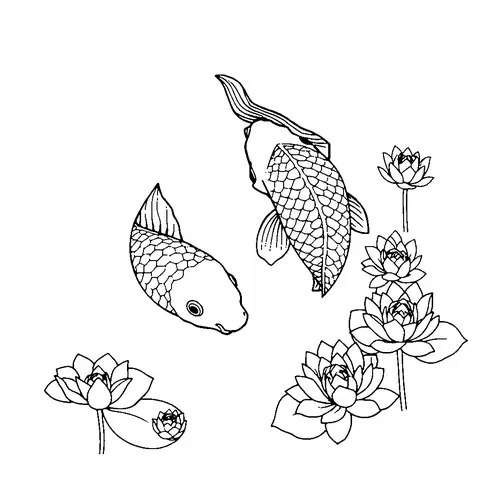
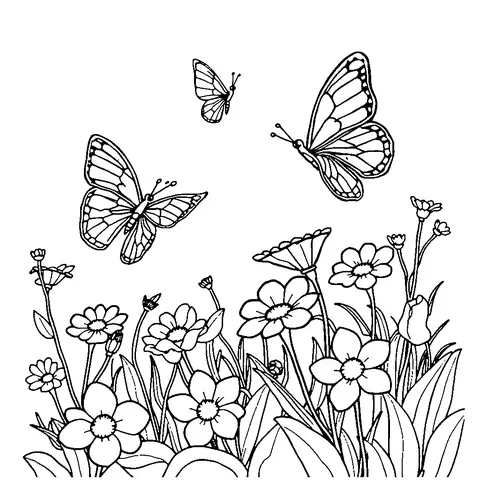
Activity: Give your child only a red, a yellow and a blue crayon and a simple page, such as a butterfly or fish. Ask them to color the whole page with just those three. It is a fun challenge and helps them see how much is possible with a few colors.
Mix to make secondary colors
When you mix two primary colors, you get a secondary color:
- Red + yellow = orange
- Yellow + blue = green
- Blue + red = purple
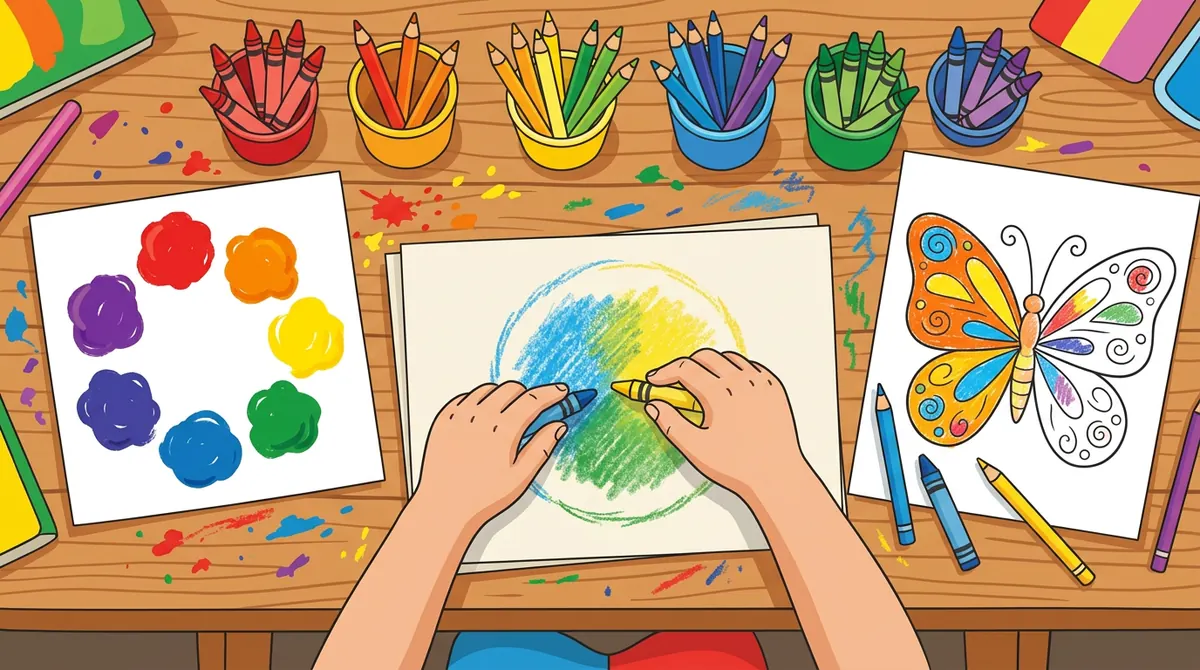
How to mix with crayons or colored pencils: Color a patch lightly with the lighter color first, such as yellow. Then color lightly over it with the second color, such as blue. Light layers blend better than heavy ones. Colored pencils blend especially well. Many children gasp the first time green appears from yellow and blue.
Activity: Draw three circles at the top of a sheet. Have your child color one red, one yellow and one blue. Below, draw three more circles and mix pairs to make orange, green and purple. They have just made their own color chart.
Build a color wheel
A color wheel arranges colors in a circle so you can see how they relate. Put the primaries evenly spaced around a circle, then place each secondary color between the two primaries that made it: orange between red and yellow, green between yellow and blue, purple between blue and red.
Activity: Draw a circle and divide it into six pie slices. Let your child fill it in: red, orange, yellow, green, blue, purple. Older children can try twelve slices by mixing the in-between colors, like yellow-green and red-orange. These are called tertiary colors.
Warm and cool colors
Ask children how colors make them feel. Most people describe red, orange and yellow as warm colors, like the sun, fire or a cozy blanket. Blue, green and purple are often called cool colors, like water, grass or a snowy evening.
Activity: Print the same page twice, such as a koi pond or a tree. Color one with only warm colors and the other with only cool colors. Put them side by side and talk about which one feels like summer and which feels like winter.
Light and dark: tints and shades
With crayons you can make a color lighter by pressing gently, or by layering white on top. You can make it darker by pressing harder or adding a little of a darker color. Artists call lighter versions tints and darker versions shades.
Activity: Color a strip with one color, pressing very lightly on the left and harder and harder toward the right. It makes a simple light-to-dark scale and helps children learn pressure control, which also builds hand strength. Read more in how coloring builds fine motor skills.
Opposites attract: complementary colors
Colors directly across from each other on the color wheel are called complementary colors: red and green, blue and orange, yellow and purple. When they sit next to each other, both look brighter. That is why a red ladybug pops on a green leaf.
Activity: Choose a page and pick one complementary pair. Color the main object in one and the background in the other. Children are often surprised how bold the result looks.
Color hunt game
Turn learning into a game. Call out a color word, like "a secondary color" or "a cool color," and have your child find something in the room or on a coloring page that matches. For younger children, keep it simple: "Find something orange!"
Tips for different ages
- Ages 4 to 5: Focus on naming colors and making green, orange and purple. Keep activities short and playful.
- Ages 6 to 7: Build a six-color wheel, then explore warm and cool colors.
- Ages 8 to 10: Try tertiary colors, tints and shades, and complementary color pages.
Supplies that help
Any crayons work, but colored pencils blend most smoothly, and lighter paper makes layering easier. Our supply guides for grown-ups compare options, and crayons vs colored pencils explains which is better for blending.
Keep it creative
Color theory is a tool, not a rulebook. Purple elephants and green suns are wonderful. Once children understand how colors work, they can break the rules on purpose. You can even make a custom page about your child's favorite thing and use it for a color experiment.